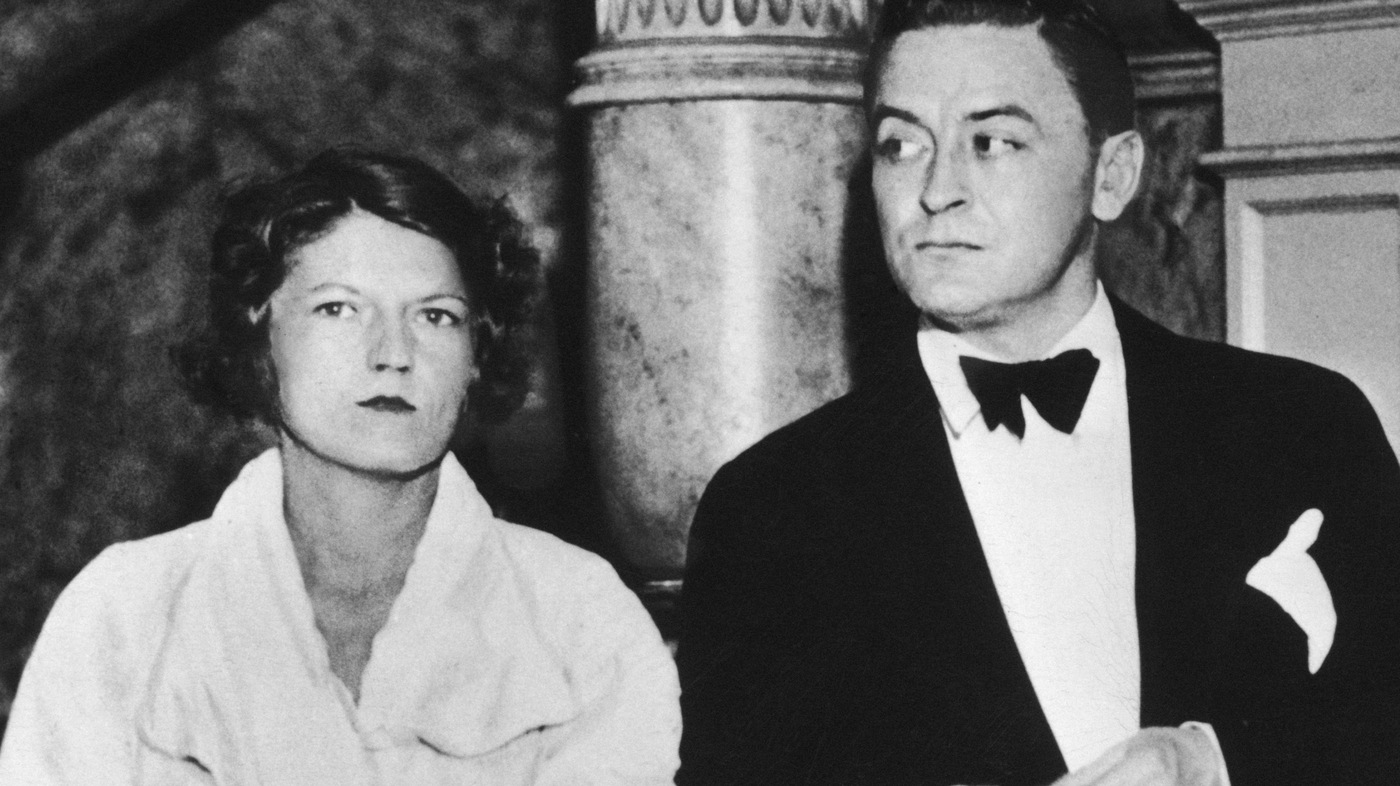
Zelda Fitzgerald, Scott Fitzgerald’s wife, shares many
qualities with Daisy Buchanan in the Great
Gatsby. In her school, Zelda was considered a popular girl and had many
boys after her, and Daisy is described as a beautiful woman that attracted many
men, including Gatsby. She was very charming and beautiful and during her time
was a flapper. As a child, she was always rebellious and when she matured she
became involved in things like drugs and alcohol. Similar to Daisy and her appreciation
and love for wealth and power. For example, the visit to Gatsby’s closet she
cried because of all his nice shirts. When Zelda was a teenager, Fitzgerald was
stationed at a nearby camp and eventually persuaded Zelda to go out with him,
and they fell in love. Zelda wanted all the attention and Fitzgerald was
willing to give everything he had to her. Furthermore, Gatsby won over Daisy’s
heart and has spent all his life planning their reunion. Both Zelda and Daisy
did not marry Fitzgerald and Gatsby; at first when Fitzgerald proposed to Zelda
she refused because her parents filled the idea in her head that he could not
support her, and Daisy married Tom Buchanan instead of Gatsby. The wealthy life
that Zelda lived eventually caught up to her and she started to suffer from
mental health disorders that led to the couple’s toxic relationship. Zelda also
tended to be dramatic and one night Zelda threw herself down the stairs because
her husband praised an actress. Daisy is also caught in the complications that
come with that much money, she cannot leave Tom but she clearly has a strong
love for Gatsby.
Sunday, October 29, 2017
Sunday, October 22, 2017
Picking Apart the Propaganda
As soon as I saw this Nazi
propaganda poster I knew I had to use it because it truly represented how the
Nazis saw the Jews. In both Maus and this propaganda poster, the Jews are
depicted as rotten mice. However, in the poster, the mouse is a morph between a
human and an animal. This makes the creature look even more horrific and
displeasing to the eye because not only are they an ugly animal to the Nazis,
they are more accurately depicted as an ugly monster. The image emphases the idea that the Jews did
not belong anywhere or to one species; they are some awful “thing” that the
Nazis were trying to exterminate.
In both pictures, the Jews are
being trapped in some way by the Nazis, and there is a bigger, scarier force surrounding
them. They will both be engulfed by the higher power which are the Nazis.
Whether it is by the hawk, in the propaganda poster, or the big mouse trap, in
Maus, they both are a symbol for defeat and suffering. Even though Mala and
Vladek are about to be killed by the mouse trap, they focus on each other
rather than dwelling on the idea that they could be walking into their deaths.
Unlike Mala and Vladek, the other mouse appears to be terrified of the hawk
above him. This could symbolize how the Nazis believed they had all the power
against the Jews and that they are strong enough to make an entire population
follow them. In their own propaganda poster, they are sure to show the authority
they have over the rotten Jews, but that is not the case for Mala and Vladek. They
represent the part of the population that will not make their lives miserable because
the Nazis, and will not give up so easily.
Sunday, October 15, 2017
A Guess on Speilman's Purpose
Speigleman makes
many motifs apparent in the chapter, Time
Flies. The motif of animal masks is a demonstration of the phony sense of
empathy he feels from the men interviewing him. All they want to do is make
money off his story, but Art feels guilty. He does not want his story to blame
one person or be used as this extreme weapon, instead he intends for it to provide
insight onto what happened during the war. Although his story is portrayed in a
comic and may inaccurately represent the Holocaust to some people, it
also adds to the theme of something being superficial.
You can’t put the Holocaust into words and one person’s experience can be
extremely different than another’s; so, you will never know what is real.
The motif of
flies throughout this chapter represent little memories from the past that he
cannot escape from and he is being tortured with them around. The flies are
attracted to the pile of dead bodies that lay under him which can symbolize how
he still carries around the guilt of these people because he is keeping them “alive”
with his story. No matter where Art goes the flies and dead bodies will always
remain a part of life. The dead bodies still appear to be mice, and this
contrasts with dates of his relative’s deaths, Speigelman includes. He can
never fully comprehend what happened because one can’t explain how something
that horrific happens to real people.

Sunday, October 8, 2017
Writing the Unwritable
When I first
glanced over page 83 of Maus, by Art
Spiegelman, I saw four mice being hanged. Although, when I looked closer there
were technically three and a half mice. Vladek’s upper body appears to be the
top of the last body being hanged. This demonstrates when he saw his friends
die or when he pictures that image in his head, a part of him dies with his
friends. Vladek feels guilty about living through the war but in a sense, he is
not all there anymore. The constant acts of violence he witnesses or
experiences wears him down which leaves nothing but a lifeless body there one
could say. He is unconsciously functioning and because a person cannot function
without their whole body. Half of the lifeless body is his and half belongs to
his friend; the top half is his own body because his memories are what dominate
his life.
How would the author be able to portray that feeling of emptiness in a
normal picture or in plain writing? Instead of either of these he utilizes the
placement of the comic boxes. By doing this he creates a bigger image that
holds another abstract meaning. This is more accurate than writing or drawing
it because there is really no way to show these feelings. Similar to how Powell
said there is no accurate way to portray the Holocaust. Vladek did not necessarily
express these emotions with his son directly but looking back, Art realized his
body language and moods conveyed another part of his story. Art notices his
father’s reactions while writing this comic, and uses it to portray pathos. Adding
another element of meaning into his comic book, Art’s work creates a new
depiction of the Holocaust.
Sunday, October 1, 2017
New Meanings
This past week, I listened to one of the most influential
speeches I have ever heard. A commencement speech, “This is Water” written by
David Foster Wallace has opened my eyes to a powerful message. In the beginning
of the speech when Wallace says, “The most obvious, ubiquitous, important
realities are often the ones that are the hardest to see and talk about” it immediately
hooked me into the speech (232). He
defines this phrase above as a “banal platitude.” This means an obvious,
overused sentence, like a cliché. In an English class, a cliché is something
that is looked at as unprofessional or unnecessary to incorporate in your writing,
but in some cases I think they are an extremely power tool.
When you look at the banal platitude (or cliché) as it’s
overused definition, it is another boring message you’ve heard about a hundred
times. Although, if you choose to look at it with a deeper meaning you will see
that it holds a very powerful truth. Wallace emphasizes that if one can learn
to think beyond the basic meaning and
get rid of our “default settings” it will lead to real freedom, which is
understanding and being aware. Just like when you read a cliché, to find the
stronger hidden meaning you must peel it apart. As you learn to think deeper
about life situations, it is so much easier to see the beauties in life.
When Wallace says the important realities are the hardest to
see, it completely makes sense. Because we see these realities all the time, we
tend to dismiss it and move on. It is similar to a monument that is built in
the middle of the hustle and bustle of everyday life. Most people tend to blend
it in their heads with the rest of their thoughts. I learned when you look
deeper into something obvious, you will develop a new meaning of that entity,
and it could change how you view it.
Subscribe to:
Posts (Atom)
Dear World
Dear World, I know you are saddened by this picture as much as I am, and I can’t help but feel terrible because I know that my ...